
Following a Missouri car accident, the injured people may be left with many unanswered questions about their injuries, financial losses, insurance coverage, and legal rights. Missouri is not a no-fault state, which may change almost everything about how a claim gets built and paid. Importantly, what you do after the crash can affect the evidence available later and how your claim develops.
At Cook, Barkett, Ponder & Wolz (CBPW Law), we built this Missouri car accident guide around Missouri law and the issues that come up in car accident claims across Southeast Missouri.
Key Takeaways:
- Missouri is a fault-based state, so the party responsible for causing a car accident may be liable for resulting damages.
- The steps you take after a crash can help preserve evidence needed to establish fault and document your losses.
- Available insurance coverage may include liability, uninsured motorist, and underinsured motorist coverage.
- Missouri car accident claims are subject to legal deadlines, with different time limits applying to certain types of claims.
- Serious injuries, disputed fault, multiple insurance policies, or a contested claim may warrant speaking with a Missouri car accident lawyer.
What Should You Do Immediately After a Missouri Car Accident?
After a Missouri car accident, address safety and medical needs first, then document the scene and exchange information with the other people involved. Report the collision where Missouri law requires it, and preserve the records that may later establish what happened.
The first few decisions should focus on preserving evidence rather than determining the entire legal case at the roadside.
1. Check for Injuries and Obtain Medical Attention
Check yourself and others for injuries and call 911 when emergency assistance is needed. Do not assume a claim is insignificant simply because you were able to leave the scene on your own.
A prompt medical evaluation creates a dated record that connects the collision to the treatment that follows, which is often what an insurer looks for first.
2. Call Law Enforcement When Appropriate
 Contact law enforcement and cooperate with the responding officer. The resulting crash report may contain information about the vehicles, drivers, roadway conditions, statements, citations, witnesses, and the officer’s observations.
Missouri law also imposes reporting requirements in certain accidents involving uninsured motorists, injuries, deaths, or property damage exceeding $500. Qualifying accidents must be reported to the Missouri Department of Revenue within 30 days under RSMo § 303.040.
3. Exchange Information
Obtain the other driver’s name, address, driver’s license information, vehicle information, insurance company, and policy information. Missouri’s Department of Revenue specifically advises drivers involved in qualifying accidents to exchange identifying and insurance information.
Get the names and contact information of any witnesses. A witness who saw the vehicles before impact may supply what the police report does not capture.
4. Photograph the Scene
Photographs can preserve evidence that disappears as traffic moves, vehicles are repaired, weather changes, or the roadway is altered. When safe to do so, photograph vehicle damage, debris, skid marks, traffic signals, signs, lane markings, the surrounding roadway, and visible injuries.
Do not put yourself in danger to obtain photographs. If you cannot safely document the scene, other evidence may still be available later.
5. Preserve Documents and Communications
Keep medical records, bills, repair estimates, insurance correspondence, photographs, and wage information. Save relevant messages and emails rather than relying on an insurance portal to retain everything indefinitely.
Is Missouri a No-Fault State?
Missouri is not a no-fault automobile insurance state. In a no-fault state, each driver’s own insurer pays for their damages regardless of who is to blame, generally through required personal injury protection coverage.
Missouri has no such requirement. The state uses Missouri’s fault-based system, meaning the person legally responsible for causing the collision can be held responsible for resulting damages. Depending on the circumstances, that may involve speeding, following too closely, failing to yield, distracted driving, impaired driving, unsafe lane changes, or another form of negligent conduct.
This distinction matters when dealing with an insurance company. The claim requires an evaluation of who caused the crash and what losses resulted from it, not simply which driver carries a policy.
The evidence used to evaluate fault can include the crash report, photographs, vehicle damage, witness testimony, video footage, electronic data, medical records, and driver statements.
Who Is at Fault in a Missouri Car Accident?
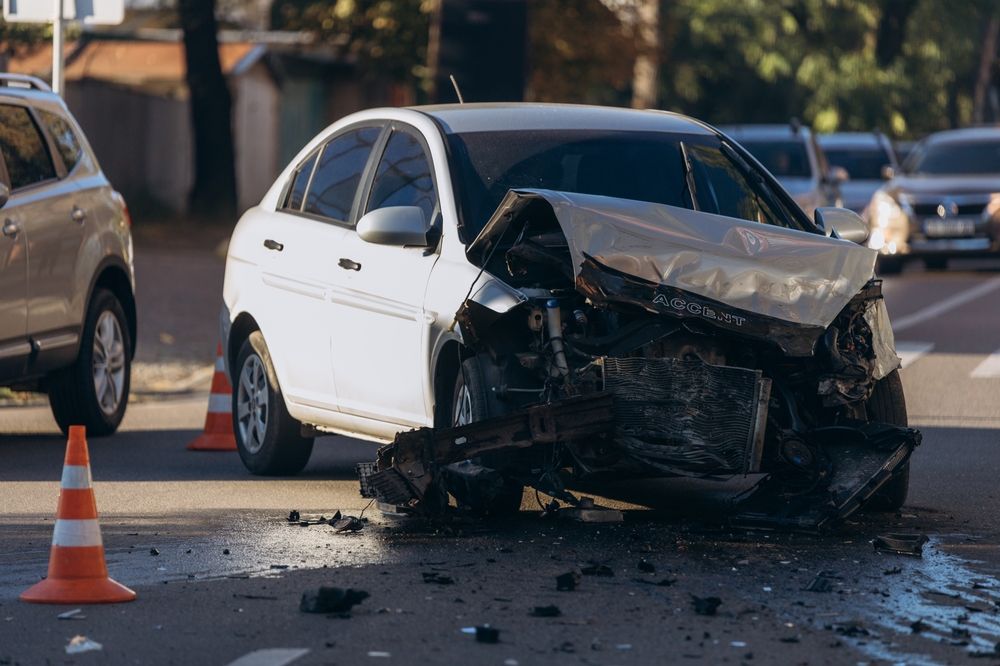 Fault in a Missouri car accident may extend beyond the drivers involved in the collision. Liability can reach several other parties under Missouri law, including:
- Employers: Under respondeat superior, a legal rule that makes an employer answerable for what an employee does on the job, a business can be financially responsible when the at-fault driver was working at the time.
- Bars, restaurants, and licensed establishments: Missouri’s dram shop statute allows a claim against a business licensed to sell liquor by the drink when it knowingly served a visibly intoxicated person, and it requires clear and convincing evidence.
- Government entities: A city, county, or state agency may be liable where a poorly designed road, missing sign, broken signal, or unmaintained roadway caused the crash, subject to Missouri’s sovereign immunity rules.
- Vehicle and parts manufacturers: Where a mechanical failure caused a crash, a manufacturer, distributor, or seller may face a product liability claim.
More than one party can share financial responsibility for a single collision. Under Missouri’s pure comparative fault system, damages are then reduced according to the injured person’s own percentage of fault.
For example, suppose a person sustains $100,000 in compensable damages but is found 20% responsible for the collision. The recoverable amount could be reduced to $80,000. The actual determination depends on the evidence and applicable law.
How Insurance Companies Approach Fault Disputes
Fault affects how much an insurer may have to pay, so the allocation of responsibility often becomes the central point of disagreement. An adjuster may rely on photographs, statements, police reports, vehicle damage, witness accounts, or other evidence to support the insurer’s position.
The three points most often contested are the percentage of fault, the cause of the injury, and the value of non-economic damages. Each one changes the final figure, and Missouri’s comparative fault system makes the fault percentage a particularly consequential number.
A recorded statement taken in the first days after a crash becomes a fixed account that later evidence gets measured against, so answers given before the facts are fully known can be difficult to revisit. A gap between the crash and the first medical visit is also commonly raised in connection with whether the injury came from the collision.
An offer made before treatment is complete is based on the records that exist at that point rather than the full course of care. However, the insurer’s assessment is not the final determination of legal responsibility. If the evidence supports a different account of the crash, the dispute may need to be addressed through further investigation, negotiation, or litigation.
What Insurance Coverage Applies After a Missouri Car Accident?
Missouri requires financial responsibility for vehicles operated on state roads. The required minimum liability limits under RSMo § 303.190 are $25,000 for bodily injury or death of one person, $50,000 for bodily injury or death in any one accident, and $25,000 for property damage.
Those minimum limits do not necessarily reflect the amount of insurance available in a particular collision. A driver’s policy may contain higher limits or other applicable coverage.
What Is Liability Insurance?
Liability insurance in Missouri is designed to cover damages for which an insured driver is legally responsible, subject to the policy’s terms and limits. If another driver caused your collision, that driver’s liability coverage may be the primary source of payment for your claim.
The insurer does not simply accept every demand. It can investigate the crash, assess liability, review records, and evaluate whether the claimed damages are supported.
What Happens if the Other Driver Has No Insurance?
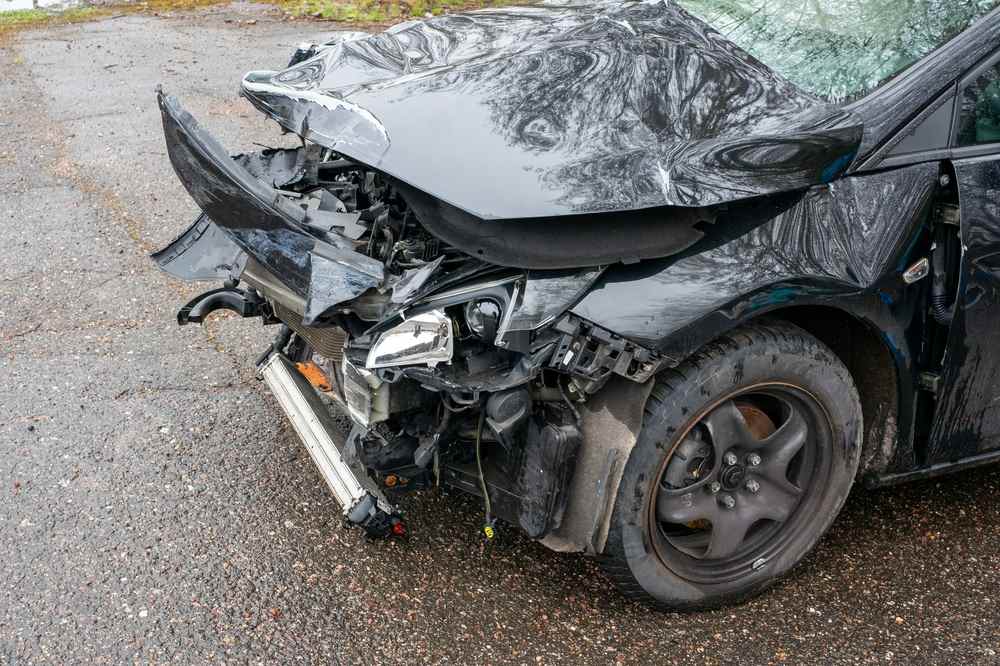 An uninsured driver does not necessarily mean there is no potential insurance coverage. Your own policy may contain uninsured motorist coverage that can apply under the circumstances.
Every automobile liability policy issued for a vehicle registered in the state must include uninsured motorist coverage under RSMo § 379.203. That section reaches hit-and-run crashes where the other driver is never identified, and it applies whether or not the vehicles physically touched.
Underinsured motorist coverage is different. Missouri does not require it, so whether it applies depends on what the policy actually purchased. When an at-fault driver’s limits are insufficient to cover serious injuries, that optional coverage may provide another source of recovery.
Compensation Available After a Missouri Car Accident
A person injured in a Missouri car accident may pursue both economic and non-economic damages. The amount depends on the injuries, the financial losses, the fault allocation, and the insurance available.
Potential damages can include:
| Economic Damages | Non-Economic Damages |
|---|---|
| Medical bills, current and future | Loss of enjoyment of life |
| Lost wages and reduced earning capacity | Pain and suffering |
| Property damage and repair costs | Emotional distress |
| Rental car, towing, diminished value | Loss of companionship (wrongful death) |
Missouri’s “No Pay, No Play” rule, at RSMo § 303.390, bars an uninsured driver from recovering non-economic losses such as pain and suffering, even when the other driver caused the crash. Economic losses stay recoverable, and the bar does not apply to passengers in the uninsured vehicle or where the at-fault driver was under the influence of drugs or alcohol.
If you have questions about your legal options after a car accident in Missouri, we can walk you through the steps that may fit your circumstances.
How Long Do You Have to File a Missouri Car Accident Lawsuit?
In many Missouri car accident cases, the applicable statute of limitations is five years. A five-year limitations period for an action involving injury to a person or certain property-related claims appears at RSMo § 516.120, where no other limitations period applies.
A five-year period does not mean you should wait to address a claim. Evidence may become challenging to obtain as time passes, and insurance claims, medical treatment, and negotiations can take place well before a lawsuit is filed.
However, there are potential exceptions that can change the applicable deadline. Claims involving governmental entities, different legal theories, contractual insurance disputes, minors, or other circumstances may be governed by different rules.
| Claim Type | Deadline | Governing Law |
|---|---|---|
| Car accident injury or property damage | 5 years | RSMo 516.120 |
| Wrongful death | 3 years | RSMo 537.100 |
| Accident report to the Department of Revenue | 30 days | RSMo 303.040 |
| Claim against a public entity or employee | Varies by claim and defendant | RSMo 537.600 |
| Minor’s injury claim | 5 years after turning 21 | RSMo 516.170 |
Claims against public entities need particular care. Missouri waives sovereign immunity only in defined situations, including the negligent operation of a motor vehicle by a public employee and a dangerous condition of public property. A separate 90-day written notice requirement applies to street and sidewalk claims, but only in cities of 100,000 or more, which does not include the communities across Southeast Missouri.
The deadline should therefore be evaluated based on the particular claim rather than assuming that every Missouri car accident receives the same five-year period.
When to Hire a Missouri Car Accident Lawyer
You may want to speak with a Missouri car accident lawyer when the accident involves serious injuries, disputed fault, significant financial losses, multiple insurance policies, an uninsured or underinsured driver, or an insurer that is challenging the claim.
Legal representation can also make sense when you are unsure whether a settlement offer accounts for the full scope of your losses.
Serious or Permanent Injuries
A serious injury can involve substantial medical expenses, lost income, and long-term limitations. These claims often require medical and financial evidence well beyond the accident report.
The Insurance Company Disputes Your Claim
If an insurer denies liability, assigns you a percentage of fault, or offers an amount that does not reflect the documented losses, legal counsel can assess the evidence and identify the available options.
More Than One Insurance Policy May Apply
Some collisions involve several sources of coverage. How those policies interact matters most when the damages exceed one driver’s liability limits.
What to Expect During a Missouri Car Accident Claim
A car accident claim moves through several stages rather than producing an immediate settlement:
| Stage | What May Happen |
|---|---|
| Immediately after the crash | Medical attention, law enforcement response, information exchange, photographs |
| First days and weeks | Insurance notices, vehicle damage evaluation, medical treatment, evidence preservation |
| Investigation | Review of liability evidence, medical records, witnesses, insurance coverage, and financial losses |
| Demand or claim presentation | Documentation of liability and damages is presented to the applicable insurer |
| Negotiation | The insurer and claimant discuss liability, damages, and potential resolution |
| Litigation, if necessary | A lawsuit may be filed when the dispute cannot be resolved through negotiation |
| Resolution | The case may conclude through settlement, trial, or another lawful resolution |
The timeline varies substantially. A property-damage-only claim may move quickly, while a disputed injury case can require far more investigation.
A case does not have to reach an impasse for a lawsuit to be filed. Filing before the limitations period expires sometimes happens while negotiations continue, simply to preserve the deadline.
What Should You Avoid Doing After a Missouri Car Accident?
Some decisions made after a crash create avoidable disputes over liability, injuries, or the value of a claim. Avoid the following:
- Guessing about the cause of the collision: State what you know rather than speculating. Early statements are later compared against physical evidence, witness accounts, and the police report.
- Minimizing an injury: Tell medical providers what you are experiencing and follow the treatment recommendations you are given. Gaps in treatment can make the extent of an injury harder to establish.
- Discarding documents: Keep medical bills, records, insurance correspondence, repair estimates, and photographs. They establish both what happened and what it cost.
- Posting detailed statements about the accident online: Public posts, photographs, and comments can be taken out of context and may become part of an insurance dispute. Avoid discussing the cause, your injuries, or your plans for the claim on social media.
- Signing a settlement release without understanding it: A release can affect future claims depending on its terms. Before accepting a settlement, make sure you understand what claims you are giving up and whether the payment addresses the losses you have sustained.
- Waiting until a filing deadline is close: The deadline is only part of the timing issue. Evidence collection, documentation, negotiation, and preparation of a claim all take time.
These precautions do not assure a particular result, but they can reduce avoidable problems while a claim is being evaluated. If liability, insurance coverage, or the extent of your losses becomes disputed, the information preserved after the crash may become particularly important.
FAQs: Missouri Car Accident Guide
The answers below address common questions about what to expect and what Missouri law provides after a collision.
Does it matter that no one was ticketed at the scene?
A citation is helpful evidence but it is not a requirement for a civil claim. A traffic case and an injury claim are decided under different standards, so fault in your claim turns on the crash evidence as a whole rather than on whether an officer issued a ticket that day.
How much is my Missouri car accident claim worth?
There is no fixed amount because claim value depends on liability, injuries, medical expenses, lost income, property damage, non-economic losses, insurance coverage, and comparative fault. A reliable evaluation requires reviewing the evidence and the particular circumstances rather than applying a standard multiplier to medical bills.
Can my damages be reduced because I was not wearing a seat belt?
Only slightly, and only under conditions Missouri law sets out. Under RSMo § 307.178, seat belt non-use is not comparative negligence, a party raising it must support it with testimony from a qualified witness, and any reduction is capped at one percent of the damages awarded.
What if the other driver was from out of state?
Missouri’s fault-based rules and comparative fault system still apply to a crash that happens within the state, regardless of where the other driver is from. Coordinating between different states’ insurance systems can add complexity, which is often where legal help becomes more valuable.
What if my accident involved a rideshare or delivery driver?
A crash involving a rideshare or delivery driver can bring an additional commercial insurance policy into play, sometimes with higher limits than a personal auto policy. Determining which policy applies often depends on whether the driver was actively transporting a passenger or delivering an order at the time.
What if I was hurt as a passenger rather than a driver?
A passenger generally has the right to pursue a claim against whichever driver caused the crash, even a family member or friend. Comparative fault rules typically do not reduce a passenger’s recovery unless the passenger somehow contributed to the crash itself.
Get a Free Case Evaluation After a Missouri Car Accident

J. Michael Ponder, Managing Partner
A Missouri car accident claim involves more than repairing a vehicle and submitting medical bills. Fault, comparative responsibility, insurance coverage, evidence, and filing deadlines all affect what happens next.
We represent injured people and families from four offices across Southeast Missouri, in Cape Girardeau, Sikeston, Bloomfield and Poplar Bluff, and we handle car accident claims in the circuit courts of the region, including the 32nd Judicial Circuit in Cape Girardeau County. We build these cases for trial from the first week rather than waiting to see what an insurer offers.
If you need to discuss a collision, call us at 573-335-6651 for a free case evaluation and speak with a Cape Girardeau car accident lawyer about the facts of your case.
Cook, Barkett, Ponder & Wolz
Cape Girardeau Office
1610 N. Kingshighway, Suite 201
Cape Girardeau, MO 63701
Offices also in Sikeston, Bloomfield, and Poplar Bluff
