


How do the causes of motorcycle accidents in Missouri affect your claim?
Most motorcycle accidents in Missouri involve a collision with another vehicle, and the other driver is often at fault. The cause of the crash directly affects who pays for the rider’s injuries, lost income, and long-term medical care.
The majority of motorcycle accidents in Missouri happen when another driver fails to see the rider. Left turns, lane changes, and intersection entries account for a large share of multi-vehicle motorcycle crashes statewide.
According to the National Highway Traffic Safety Administration (NHTSA), motorcyclists are roughly 27 times more likely than passenger car occupants to die in a crash.
That number reflects both the physical vulnerability of riders and the reality that other drivers frequently misjudge a motorcycle’s speed or presence on the road.
Understanding the common causes of motorcycle accidents in Missouri matters because fault determines who pays. Across Southeast Missouri, the road conditions, freight traffic, and rural infrastructure riders face every day create risks that statewide data alone may not capture.
Key Takeaways About Causes of Motorcycle Accidents in Missouri
- Most multi-vehicle motorcycle crashes in Missouri happen because another driver failed to yield, turned left into a rider’s path, or did not check a blind spot.
- Southeast Missouri’s rural two-lane roads, uncontrolled intersections, and heavy freight truck traffic on I-55 create hazards that differ from urban corridors.
- Missouri follows pure comparative fault, meaning a rider may still recover compensation even if partially at fault, but the recovery is reduced by the rider’s percentage of responsibility.
- Since Missouri revised its helmet law in 2020, insurance companies may use a rider’s helmet status as a factor in settlement negotiations, even in crashes the rider did not cause.
Why Do Most Motorcycle Crashes in Missouri Involve Other Drivers?
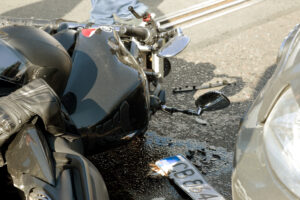
Other drivers cause the majority of multi-vehicle motorcycle crashes in Missouri by failing to see or yield to the rider. NHTSA data shows that roughly 62% of fatal motorcycle crashes involve at least one other vehicle.
A motorcycle’s smaller profile makes it harder for drivers to notice, especially at intersections and during lane changes. The most common driver errors in Missouri motorcycle collisions include:
- Turning left across a motorcycle’s path at an intersection
- Pulling out from a side road or driveway without yielding
- Changing lanes without checking mirrors or blind spots
- Following too closely and failing to stop in time
Each of these errors may support a negligence claim under Missouri law when the other driver’s failure to see the motorcycle caused the crash.
Left-Turn Collisions at Intersections
Left-turn accidents are among the most dangerous motorcycle crashes in Missouri.
A driver turning left may misjudge a motorcycle’s speed or miss the rider entirely, resulting in a head-on or T-bone impact with almost no reaction time.
Failure to Yield on Rural Roads
On SEMO’s two-lane highways, drivers regularly pull onto main roads from side streets, farm access points, and gravel driveways.
Many of these intersections lack traffic signals. A driver entering the road without looking may give a rider no time to brake or swerve.
How Do SEMO Road Conditions Contribute to Motorcycle Accidents?
Road conditions across Southeast Missouri create motorcycle hazards that urban riders rarely face. Many county roads and state routes have not been resurfaced in years, and potholes, crumbling edges, and gravel runoff may force a rider to swerve suddenly or lose traction.
Specific SEMO road conditions that contribute to motorcycle crashes include:
- Loose gravel at the edges of paved roads and at unpaved intersections
- Standing water on low-lying roads near the Mississippi River floodplain around Cape Girardeau and Scott City
- Deer and wildlife crossings on rural highways between Poplar Bluff and Cape Girardeau
- Poorly marked curves on county roads with no warning signage or guardrails
When a road defect contributes to a motorcycle accident, the public entity responsible for that road may share liability in limited circumstances.
Missouri’s sovereign-immunity rules under RSMo § 537.600 are strict, and some municipal roadway-defect claims require written notice within 90 days.
The applicable notice rules depend on the public entity and roadway involved, so riders facing this situation should speak with an attorney quickly.
What Role Do Freight Trucks Play in Motorcycle Crashes in Southeast Missouri?
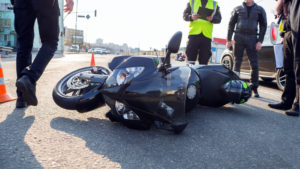
Freight trucks on the I-55 corridor through Southeast Missouri create significant risks for motorcycle riders. I-55 connects SEMO to St. Louis and Memphis, and heavy commercial traffic flows through Cape Girardeau daily.
Freight trucks are particularly dangerous for motorcycles because of:
- Blind spots (commonly called no-zones) that extend far enough to hide a motorcycle entirely from a truck driver’s mirrors
- Tire blowouts that throw debris across lanes at high speed
- Wind turbulence from a passing truck that may push a motorcycle out of its lane
- Wide turns at SEMO intersections where a truck driver may not see a motorcycle alongside
A crash with a commercial truck often involves both the driver and the trucking company as potential defendants.
Federal Motor Carrier Safety Administration (FMCSA) regulations govern driver hours, maintenance, and cargo loading. Violations of those rules may strengthen a rider’s negligence claim.
How Does Distracted and Impaired Driving Cause Motorcycle Accidents in Missouri?
Distracted and impaired driving are two of the leading behavioral causes of motorcycle accidents in Missouri. Both reduce a driver’s ability to detect a motorcycle and increase the likelihood of a high-speed collision.
Distracted Driving
Distracted driving means any activity that pulls a driver’s attention from the road. The most common forms that lead to motorcycle crashes include:
- Texting or using a phone while driving
- Adjusting a GPS or entertainment system
- Eating or drinking behind the wheel
- Talking to passengers while approaching an intersection
A distracted driver who misses a motorcycle at an intersection may cause a crash with no warning. Because motorcycles lack a protective structure, even a low-speed impact may result in serious injuries.
Impaired Driving
NHTSA reports that alcohol impairment is a significant factor in fatal motorcycle crashes nationwide. A driver’s violation of Missouri’s DWI laws may support a negligence per se argument or serve as evidence of negligence in a civil case.
Negligence per se is a legal doctrine where a violation of a safety statute may serve as proof of fault. The rider still must prove that the violation caused or contributed to the crash and that the crash caused compensable damages.
A driver with a blood alcohol concentration (BAC) above the legal limit may face both criminal charges and a civil claim for the rider’s injuries.
Does Missouri’s Helmet Law Affect a Motorcycle Accident Claim?
Missouri’s helmet law may affect a motorcycle accident claim if the rider was not wearing a helmet at the time of the crash. Since 2020, RSMo § 302.020 no longer requires all riders to wear helmets.
Missouri’s current helmet requirements apply based on age, permit status, and insurance:
- All riders and passengers under 26 must wear a helmet while the motorcycle is in motion
- Any rider with an instruction permit must wear a helmet regardless of age
- Riders 26 and older may ride without a helmet if they carry qualifying health insurance under RSMo § 302.026
How Insurers May Use Helmet Status Against Riders
Even when a rider legally chose not to wear a helmet, an insurer may argue that head injuries would have been less severe with one.
This is a damages argument, not a fault argument. The insurer is trying to reduce the amount owed, not deny responsibility for the crash.
Since the 2020 revision, the Missouri Department of Transportation has reported a significant increase in motorcycle fatalities statewide. That trend has made helmet-related arguments more common in insurance negotiations and at trial.
How Cook Barkett Ponder & Wolz Handles Motorcycle Accident Cases

Motorcycle accident cases in SEMO often involve disputes over visibility, road conditions, and rider behavior. A firm familiar with these patterns may be better positioned to challenge an insurer’s version of events.
In the motorcycle cases we handle across SEMO, the pattern is often the same: another driver says they never saw the rider.
Our job is to test that explanation against the physical evidence, witness accounts, sight lines, traffic controls, and the rider’s lane position. We do not let an insurer turn a visibility problem into an automatic blame argument against the motorcyclist.
Cook Barkett Ponder & Wolz (CBPW Law) represents motorcycle accident victims across Cape Girardeau, Sikeston, Scott City, Poplar Bluff, and the broader Southeast Missouri region.
Trial Preparation and Motorcycle Claims
Every motorcycle case we handle gets built for the courtroom, even when settlement is the most likely outcome. We do not push clients toward litigation for its own sake, but we are ready to go to trial in Cape Girardeau County Circuit Court if the other side refuses a reasonable number.
Referrals and Co-Counsel
For attorneys or smaller firms handling motorcycle injury matters, we accept referrals and co-counsel arrangements. Riders and referring attorneys across Southeast Missouri may reach out to our Cape Girardeau office to discuss a potential case.
FAQs for Causes of Motorcycle Accidents in Missouri
These are questions riders and their families bring to us before they have read anything on our site. They reflect what people search for when looking for legal help after a motorcycle crash.
Do I need a lawyer after a motorcycle accident in Missouri?
Speaking with a lawyer after a motorcycle accident is a good idea, especially if another driver was involved. Insurance companies may try to shift fault to the rider based on speed, lane position, or helmet status.
An attorney who handles motorcycle cases may identify liability and coverage issues a rider might miss on their own.
What is my motorcycle accident case worth?
The value of a motorcycle accident case depends on injury severity, medical costs, lost wages, and fault allocation. Missouri’s comparative fault rules reduce compensation by the rider’s percentage of responsibility.
No attorney may guarantee a specific amount before reviewing the medical records and facts of the crash.
How do I prove the other driver caused my motorcycle accident?
Proving fault requires evidence that the other driver failed to act with reasonable care. Police reports, witness statements, traffic camera footage, and physical evidence from the scene all play a role.
An attorney may gather and preserve this evidence before it is lost or destroyed.
What if the insurance company says the motorcycle accident was my fault?
Insurance companies frequently try to blame motorcycle riders for crashes, even when another driver caused the collision. Missouri follows pure comparative fault, meaning a rider may still recover compensation even with shared responsibility.
Challenging the insurer’s fault assessment with physical evidence may significantly change the outcome.
Can a motorcycle rider recover compensation if they were partly at fault?
Yes, a motorcycle rider may still recover compensation in Missouri even with shared fault. Missouri follows pure comparative fault, a rule established through Missouri case law.
The rider’s recovery is reduced by their percentage of responsibility, but no threshold bars the claim entirely.
Does not wearing a helmet automatically reduce a motorcycle accident settlement?
No, it does not automatically reduce a settlement. Missouri law allows many riders over 26 to ride without a helmet if they carry qualifying health insurance.
An insurer may argue a helmet would have reduced head injuries, but that argument depends on the medical evidence in each case.
How long does a motorcycle accident victim have to file a lawsuit in Missouri?
Missouri allows five years from the date of injury to file a personal injury lawsuit under <a href=”https://revisor.mo.gov/main/OneSection.aspx?section=516.120″ target=”_blank” rel=”noopener”>RSMo § 516.120</a>. Wrongful death claims have a three-year deadline.
Waiting too long may weaken the case because evidence degrades and witnesses forget details over time.
Are motorcycle accident cases harder to win than car accident cases?
Not necessarily, but motorcycle cases sometimes involve extra bias. Some jurors hold negative assumptions about riders, and insurers may try to use that bias to shift blame.
An attorney who has handled motorcycle cases in front of local juries may anticipate and counter those arguments.
Who pays for a motorcycle accident caused by poor road conditions?
A public entity responsible for road maintenance may be liable in limited circumstances. Missouri’s sovereign-immunity rules under RSMo § 537.600 are strict, and some municipal roadway-defect claims require written notice within 90 days.
The applicable notice rules depend on the specific public entity and roadway involved, so early legal review matters.
Protect Your Motorcycle Accident Claim in Missouri
The cause of a motorcycle accident determines who pays and how hard the other side may fight to avoid responsibility.
Missouri riders face risks from inattentive drivers, dangerous road conditions, freight truck traffic, and insurance arguments that blame the rider rather than the driver who caused the crash.
Cook Barkett Ponder & Wolz represents motorcycle accident victims throughout Cape Girardeau and Southeast Missouri.
Call (573) 335-6651 in Cape Girardeau, (573) 481-4301 in Sikeston, or (573) 891-1440 in Bloomfield to talk through your motorcycle accident claim.
This content is provided for general informational purposes. It is not legal advice and does not create an attorney-client relationship. Individual results vary based on the facts of each case. Past results are not a guarantee of the same result in your case.