
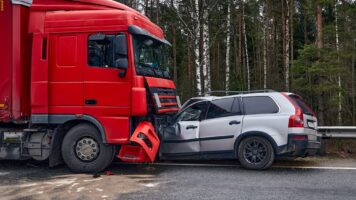

After a car accident, you are often left with a flood of questions. Who is going to pay for the medical bills? How will my car get fixed? One of the most important questions that will shape the answers to all the others is: Who was at fault?
The process of determining fault in a car accident claim is central to your ability to recover compensation for your injuries and losses. In Southeast Missouri, the answer isn’t always a simple case of one person being 100% to blame.
Knowing the basics of Missouri law and the types of evidence that matter can help you understand your rights and what to expect as you begin the process of seeking accountability and financial recovery.
Key Takeaways about Determining Fault in a Car Accident Case
- Missouri follows a “pure comparative fault” rule, which means a person can recover damages even if they are partially responsible for the accident.
- A person’s compensation is reduced by their percentage of fault; for example, being 20% at fault reduces the final award by 20%.
- Evidence such as police reports, witness statements, photos, and traffic law violations are critical in establishing who is liable for a crash.
- Insurance companies conduct their own fault investigations, but their conclusions are not final and can be challenged.
- The determination of fault directly impacts who is financially responsible for medical expenses, lost wages, and other damages resulting from the collision.
Understanding Missouri’s Comparative Fault Law
 When lawyers and insurance adjusters talk about “fault,” they are really talking about legal responsibility, or “liability.” In Missouri, this concept is governed by a rule called pure comparative fault.
In simple terms, pure comparative fault means that more than one person can share the blame for an accident. After a crash, a percentage of fault is assigned to each driver involved based on their actions. For example, imagine a driver runs a stop sign and hits you, but you were driving five miles per hour over the speed limit. A jury might decide the other driver was 90% at fault for running the stop sign, but you were 10% at fault for speeding.
Under this system, you can still seek compensation even if you were partially to blame. Your final compensation amount is simply reduced by your percentage of fault. In the example above, if your total damages were $100,000, you would be able to recover $90,000 ($100,000 minus your 10% share of the fault). This system ensures that accountability is distributed fairly based on each party’s contribution to the incident.
The Key Evidence Used in Determining Fault in a Car Accident Claim
Because fault is often shared and can be disputed, proving the other driver was primarily responsible requires strong evidence. A successful claim is built on a foundation of clear, credible proof that shows what happened and why. Different pieces of evidence work together to create a complete picture of the collision for insurance companies or a jury.
The Official Police Report
When law enforcement responds to a car crash in SEMO, from the busy intersections in Cape Girardeau to the rural roads around Poplar Bluff, the responding officer will create an official police report. This document is one of the first and most important pieces of evidence in a claim.
The report typically contains:
- The names and contact information of all drivers, passengers, and witnesses.
- A diagram of the accident scene, showing the position of the vehicles.
- The officer’s narrative of how they believe the accident occurred.
- Any traffic tickets (citations) issued at the scene.
While the officer’s opinion on who was at fault is not legally binding, it is highly influential. Insurance adjusters place significant weight on the police report when making their initial determination of liability.
Witness Statements and Testimony
An independent witness who saw the crash can provide a powerful, unbiased account of the events. A neutral third party who has nothing to gain from the outcome can confirm key details, such as which driver had the green light or who changed lanes improperly. If you are able to, getting the names and phone numbers of anyone who saw the collision can be incredibly helpful for your case.
Their statements can help resolve disagreements between the drivers’ versions of the story and provide a clearer understanding of the incident.
Photographic and Video Evidence
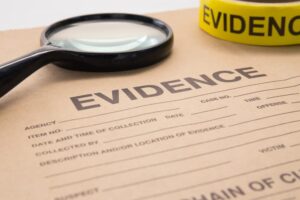 In today’s world, visual evidence is more important than ever. Pictures and videos can tell a story in a way that words cannot. After an accident, if you are physically able, taking photos and videos of the scene from multiple angles can preserve critical details.
Helpful things to capture include:
- The damage to all vehicles involved, both close-up and from a distance.
- Skid marks, debris, or any other marks on the road surface.
- The weather, road conditions, and any relevant traffic signs or signals.
- The surrounding area to establish the location.
This type of evidence can be invaluable. Additionally, footage from a driver’s dashcam or a security camera at a nearby business along William Street in Cape or Main Street in Sikeston can provide undeniable proof of what happened, leaving little room for dispute.
The “Rules of the Road” – Traffic Laws
Every driver in Missouri has a duty to operate their vehicle safely and follow all traffic laws. When a driver violates a law from the Missouri Driver Guide and causes a collision, this violation is often considered strong evidence of negligence. Negligence is a legal term that simply means someone failed to act with reasonable care, and that failure caused harm to someone else.
Common traffic violations that lead to accidents include:
- Exceeding the speed limit
- Failing to stop at a red light or stop sign
- Making an improper turn
- Following another vehicle too closely
- Texting while driving or other forms of distracted driving
Proving that the other driver broke a specific traffic law is a powerful tool for establishing their fault in the accident.
Common Scenarios and How Fault is Often Viewed
While every car accident is unique, some patterns appear frequently. Understanding the general assumptions of fault in these common situations can provide some clarity, but it’s important to remember that exceptions always exist based on the specific evidence.
Rear-End Collisions
In most cases, the driver who hits a car from behind is considered at fault. This is because every driver is responsible for maintaining a safe following distance to allow enough time to stop. However, there are situations where the front driver could be partially or fully at fault. This might happen if the lead driver suddenly slammed on their brakes for no reason, had non-working brake lights, or cut off the other driver and immediately braked.
Left-Turn Accidents
Accidents that happen when one driver is making a left turn are also common. The driver turning left almost always has the legal duty to yield to oncoming traffic. Therefore, if a collision occurs, the turning driver is often presumed to be at fault. An exception might apply if the oncoming driver was speeding excessively, ran a red light, or was otherwise driving recklessly, giving the turning driver no reasonable opportunity to complete the turn safely.
Accidents at Four-Way Stops
Intersections with four-way stops can cause confusion. The rules of right-of-way are clear: the vehicle that arrives at the intersection first has the right to go first. If two vehicles arrive at the same time, the vehicle on the right has the right-of-way. Fault is typically assigned to the driver who failed to follow these rules. Witness statements are often crucial in these “he said, she said” situations to determine who arrived first and had the legal right to proceed.
The Role of Insurance Companies
Soon after an accident, you will likely be contacted by an insurance adjuster from the other driver’s company. It is this adjuster’s job to investigate the claim and determine fault on behalf of the insurance company. They will review the police report, talk to witnesses, and look at photos of the damage. They will also likely ask you to provide a recorded statement about what happened.
It is important to remember that the insurance adjuster’s goal is to minimize the amount of money their company has to pay out. Their determination of fault is based on their own investigation and serves their interests. You do not have to accept their decision, especially if you believe it is incorrect. Their assessment is not the final word, and you have the right to challenge their findings and present your own evidence.
What Happens When Fault is Disputed?
 It is very common for drivers to have different memories or interpretations of how a crash occurred. When fault is disputed, determining fault in a car accident claim becomes a more detailed process. This is when the strength of your evidence truly matters.
If the insurance company disputes your claim or assigns you a higher percentage of fault than you believe is fair, the case may require further action. This can involve:
- Presenting additional evidence that was initially overlooked.
- Hiring an accident reconstruction professional to analyze the physical evidence and provide an opinion on the crash dynamics.
- Filing a lawsuit to have the matter decided in court.
Having a strong case built on solid evidence is essential when you are facing a dispute over liability.
Why a SEMO Car Accident Lawyer Can Help with Determining Fault
Building a case to prove fault requires a deep understanding of Missouri law and a thorough investigative process. While you focus on your physical and emotional recovery, a dedicated personal injury attorney can handle the complex work of establishing liability. A lawyer who serves the Southeast Missouri community understands the local courts and has the resources to stand up to large insurance companies.
An experienced car accident lawyer can assist with your claim by:
- Launching an independent investigation into the accident to uncover all the facts.
- Gathering and preserving crucial evidence, including witness statements, photos, and official reports.
- Consulting with accident reconstruction specialists or other professionals to analyze the cause of the crash.
- Managing all communications with the insurance companies on your behalf.
- Building a persuasive case that clearly demonstrates the other party’s responsibility for your injuries.
This support allows you to focus on what matters most—your health and your family—while a professional works to protect your rights.
Fault in Car Accident Claims FAQs
Here are answers to some frequently asked questions about how fault is established after a car accident in Missouri.
What happens if the other driver was uninsured or underinsured?
If the at-fault driver has no insurance, you may be able to file a claim with your own insurance company through your uninsured motorist (UM) coverage, if you have it. If the driver has insurance but not enough to cover all your damages, your underinsured motorist (UIM) coverage may apply. These coverages are designed to protect you in these difficult situations.
As a passenger, who can I file a claim against?
If you were injured as a passenger, you may have a claim against the driver of the car you were in, the driver of the other vehicle, or both. Because you had no control over either vehicle, it is highly unlikely that any fault would be assigned to you, allowing you to seek compensation from the responsible driver’s insurance policy.
How long do I have to file a car accident claim in Missouri?
In Missouri, the statute of limitations for filing a personal injury lawsuit is generally five years from the date of the accident. It is very important to act within this timeframe, because if you miss the deadline, you may lose your right to seek compensation forever.
Contact Cook, Barkett, Ponder & Wolz for a Free Case Evaluation
Daniel J. Grimm, Car Accident Lawyer
If you or a loved one has been injured in a car accident, you don’t have to figure out the next steps by yourself. Determining fault in a car accident claim is critical, and having a dedicated legal team on your side can make all the difference. At Cook, Barkett, Ponder & Wolz, we have been fighting for the rights of injured people across Southeast Missouri for decades.
Our team understands that your story is important. We take the time to listen and build a strong case designed to hold the responsible parties accountable and secure the resources you need to move forward. With more than 100 years of combined trial experience, we are ready to stand by your side. Contact us today at (573) 335-6651 or through our online form for a free, no-obligation consultation to discuss your case.