


If you’ve been injured in an accident with a large commercial truck, one of the first questions on your mind is likely, “How long will this take?” The answer isn’t simple—the timeline for a semi-truck accident settlement can range from several months to, in some complex cases, a few years.
For those recovering in Southeast Missouri, the uncertainty of a legal process can be an added source of stress. The path to a fair settlement is a journey with distinct stages, each requiring careful attention to detail to protect your rights and your future. Knowing what to expect can provide clarity and peace of mind during this difficult period.
Key Takeaways about How Long It Takes to Settle a Semi-Truck Accident Case
- A settlement for a semi-truck accident can take anywhere from several months to more than a year to resolve.
- The timeline is heavily influenced by factors such as the severity of injuries, the clarity of who is at fault, and the number of parties involved.
- Reaching Maximum Medical Improvement (MMI) is a vital point in the process, as it helps determine the full value of a claim.
- The settlement process typically involves a detailed investigation, collection of evidence, calculation of damages, and extensive negotiation with insurance companies.
- Unlike typical car accidents, semi-truck cases often involve federal regulations and multiple defendants, which adds layers of complexity.
Why Semi-Truck Accident Cases Are More Complex Than Car Wrecks
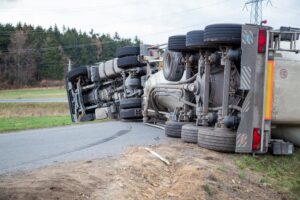 You might wonder why a collision involving a semi-truck is so different from a standard car accident. The difference lies in the complexity and the stakes. A fully loaded commercial truck can weigh up to 80,000 pounds, and the force it generates in a crash often leads to very serious injuries and significant damages. This increased severity automatically makes the legal process more involved.
Several unique elements set these cases apart:
- Multiple Liable Parties: In a typical car accident, you’re usually dealing with one other driver. In a truck accident, fault could lie with the truck driver, the trucking company that employs them, the company that loaded the cargo, a third-party maintenance provider, or even the truck’s manufacturer. Identifying all responsible parties is a critical and time-consuming first step.
- Federal Regulations: The trucking industry is governed by a specific set of federal laws from the Federal Motor Carrier Safety Administration (FMCSA). These rules cover everything from how many hours a driver can be on the road to required vehicle maintenance and inspection schedules. A violation of these regulations can be a key piece of evidence in your case.
- Higher Insurance Coverage: Because of the potential for immense damage, commercial trucks carry insurance policies with much higher limits than standard passenger vehicles. While this means there is more potential compensation available, it also means the insurance companies will fight much harder to minimize their payout, often employing large legal teams to contest claims.
These factors combine to create a legal situation that requires a thorough and methodical approach, which naturally extends the time it takes to reach a fair resolution.
The Critical Steps That Shape Your SEMO Truck Accident Settlement Timeline
The journey from injury to settlement follows a structured path. Each stage is essential for building a strong case and must be completed before a final agreement can be reached. Knowing these steps can help you understand why your case might be taking a certain amount of time.
Step 1: The Initial Investigation and Evidence Gathering
This is the foundation of your entire claim. Immediately after a law firm is retained, a deep investigation begins to preserve crucial evidence before it disappears. This isn’t just about looking at a police report; it’s a comprehensive effort to piece together exactly what happened.
This phase includes:
- Securing the truck’s “black box” or Electronic Data Recorder (EDR), which contains vital information about the truck’s speed, braking, and other actions just before the crash.
- Obtaining the driver’s logbooks, employment history, and toxicology reports.
- Reviewing the trucking company’s hiring practices, safety records, and vehicle maintenance history.
- Interviewing witnesses and consulting with accident reconstruction professionals to analyze the crash scene, whether it was on a busy stretch of I-55 near Scott City or a rural road in the Missouri Bootheel.
This investigative phase can take weeks or even months, but it is absolutely vital. The evidence collected here will be used to establish who was at fault and build leverage for negotiations.
Step 2: Reaching Maximum Medical Improvement (MMI)
One of the most significant milestones in your personal injury case is reaching what’s known as Maximum Medical Improvement, or MMI. In plain English, MMI is the point at which your doctors determine that your medical condition has stabilized and is unlikely to improve further. You may still require ongoing care, but your long-term prognosis is clear.
It is crucial to wait until you reach MMI before trying to settle your case. Why? Because until you reach MMI, you and your legal team cannot know the full extent of your damages. Settling too early means you might not account for:
- The total cost of all your medical treatments.
- The need for future surgeries, physical therapy, or long-term care.
- The full impact of the injury on your ability to work and earn a living in the future.
- The true scope of your pain and suffering.
Rushing this step could lead to accepting a settlement that is far less than what you need to cover your future expenses. Patience during your physical recovery is directly linked to the strength of your financial recovery.
Step 3: Calculating Your Damages
 Once your medical future is clear, your legal team can begin the detailed work of calculating the total value of your losses, known as “damages.” This calculation is comprehensive and aims to account for every single way the accident has affected your life. These damages generally fall into two categories.
- Economic Damages: These are the tangible, verifiable financial losses you have suffered. They include things like all past and future medical bills, lost wages from time off work, reduced earning capacity if you cannot return to your previous job, and property damage to your vehicle.
- Non-Economic Damages: These are the intangible losses that don’t come with a price tag but are just as real. This category covers your physical pain, emotional distress, loss of enjoyment of life, scarring or disfigurement, and the impact on your personal relationships.
A detailed demand package is then assembled, presenting all the evidence from the investigation and a full accounting of your damages to the insurance company. This document is the official start of the negotiation process.
Step 4: The Demand Letter and Negotiation
With the demand package sent, the negotiation phase begins. The insurance company will review the information and respond with an initial offer. This first offer is almost always far below the actual value of your claim.
This starts a period of back-and-forth communication between your attorney and the insurance adjuster. Your lawyer will present arguments, highlight key pieces of evidence, and counter low offers with well-supported reasoning. This is often the longest part of the settlement process and can take many months. A successful outcome depends on persistence and a willingness to stand firm for the full compensation you deserve.
Step 5: Filing a Lawsuit (If Necessary)
Most personal injury claims are settled out of court. However, if the insurance company refuses to negotiate in good faith or make a reasonable offer, it may be necessary to file a lawsuit.
Filing a lawsuit does not mean your case will automatically go to a full trial in front of a judge and jury. In fact, filing a suit often prompts the insurance company to take the claim more seriously and can lead to a fair settlement during the pre-trial process. This stage initiates a formal process called “discovery,” where both sides exchange information under oath. Many cases settle during or immediately after the discovery phase, long before a trial date is reached.
Factors That Can Speed Up or Slow Down Your Settlement
Every semi-truck accident case is unique, and several variables can influence how long it takes to settle. Understanding these can help set realistic expectations for your own case.
The timeline of a settlement can be affected by the following:
- Disputes Over Liability: If it is crystal clear that the truck driver was 100% at fault, the process may move more quickly. However, if the insurance company tries to argue that you were partially to blame or that another party was responsible, it will add significant time to the case as liability is argued and proven.
- Severity of Injuries: As discussed, cases involving serious, life-altering injuries require a longer time to resolve because it takes longer for the person to reach MMI. A case with minor injuries and a quick recovery will naturally settle faster than one involving a traumatic brain injury or paralysis.
- The Insurance Company’s Tactics: Some insurance carriers are more reasonable and willing to negotiate fairly. Others are known for using delay tactics and making consistently low offers to wear down claimants. The insurer’s approach can be one of the biggest factors in the timeline.
- Multiple Defendants: If the case involves claims against the driver, the trucking company, and a maintenance facility, coordinating with multiple legal teams and insurance policies will add complexity and time to the process.
Ultimately, while a faster settlement might seem appealing, the primary goal is always to secure a fair settlement that fully addresses your long-term needs.
Understanding Missouri’s Statute of Limitations
 In Missouri, there is a legal deadline for filing a personal injury lawsuit, known as the statute of limitations. For most personal injury cases, including truck accidents, the law gives you five years from the date of the accident to file a claim.
While five years may sound like a long time, it is never a good idea to wait. Key evidence can be lost or destroyed, witnesses’ memories can fade, and the trucking company may dispose of important records. Building a strong semi-truck accident case requires starting the investigation as soon as possible. Contacting an attorney early ensures that critical evidence is preserved and your rights are protected from the very beginning.
The Dangers of Accepting a Quick, Early Settlement Offer
Shortly after an accident, you may receive a call from the trucking company’s insurance adjuster with a seemingly friendly check-in and a quick settlement offer. It can be tempting to accept, especially when medical bills are starting to arrive. However, this is almost always a tactic to close your case for a fraction of its true worth.
Insurance companies know that the full extent of your injuries and financial losses may not be apparent for weeks or months. Their goal is to get you to sign a release of all claims before you understand what your case is really worth. Once you accept a settlement and sign that release, you give up your right to seek any further compensation for your injuries, even if you later require unexpected surgery or can’t return to work.
FAQs for How Long to Settle a Semi-Truck Accident
Here are some common questions we hear from people in Southeast Missouri who are going through this difficult process.
What is the average settlement for a semi-truck accident in Missouri?
There is no “average” settlement amount because each case is entirely unique. The value of a settlement depends on specific factors like the severity of your injuries, the total of your medical bills and lost wages, your long-term prognosis, and the strength of the evidence. Any lawyer who promises a specific amount before thoroughly reviewing your case is not being upfront with you.
Will my case have to go to trial?
The vast majority of personal injury cases are settled before ever reaching a courtroom. Negotiation, mediation, and other forms of resolution are much more common. However, the best way to secure a fair settlement offer is to prepare the case as if it is going to trial. This shows the insurance company that you are serious and ready to fight for what you deserve.
How does the “black box” data recorder affect my case timeline?
The black box, or EDR, can be a powerful piece of evidence. If the data clearly shows the trucker was speeding or braked too late, it can help establish fault quickly and potentially speed up a settlement. However, if the data is corrupted, missing, or disputed by the trucking company, it can become a point of contention that may lengthen the investigation phase.
What if I was partially at fault for the accident?
Missouri follows a “pure comparative fault” rule. This means you can still recover damages even if you were partially at fault for the accident. However, your final compensation award will be reduced by your percentage of fault. For example, if you were found to be 10% at fault, your settlement would be reduced by 10%. Determining these percentages can add complexity and time to negotiations.
Can I get a cash advance on my pending settlement?
There are companies that offer “lawsuit loans” or cash advances against a potential settlement. While this may seem like a solution for immediate financial pressures, these loans typically come with very high interest rates and fees. It is a significant financial decision that should be carefully considered and discussed with your family and your attorney before you proceed.
Connect with a SEMO Truck Accident Lawyer Who Understands
We know that waiting for a resolution after a serious truck accident is difficult. As you focus on your recovery, you deserve a legal team that will handle the details with dedication and care. At Cook, Barkett, Ponder & Wolz, we believe our success comes from not just knowing the law, but from knowing you and understanding the challenges you are facing.
Our team has more than 100 years of combined trial experience and a deep commitment to helping families in our community. We take the time to build a strong case that reflects the full impact the accident has had on your life. If you or a loved one has been injured in a semi-truck accident in Southeast Missouri, let us help you. You pay no fees unless we win.
Call us today for a free, no-obligation case evaluation.