

Can I recover compensation if an uninsured driver hits me in Missouri?
If the driver who hit you has no insurance, you can file an uninsured motorist claim in Missouri with your own auto insurer. Missouri requires auto liability policies to include this coverage, with minimum limits of $25,000 per person and $50,000 per accident. You can also sue the uninsured driver, though collecting from that driver depends on whether they have assets or income.
The other driver’s insurance card turned out to be expired, and now you are wondering who pays for the scan your doctor ordered.
An uninsured motorist claim in Missouri goes to your own insurer when you qualify for coverage because state law requires UM coverage in auto liability policies.
That claim follows contract rules that differ from a claim against the other driver. It also raises other decisions, such as whether suing the driver makes sense and what happens if you lacked insurance too.
Key Takeaways About an Uninsured Motorist Claim in Missouri
- Missouri requires uninsured motorist coverage in auto liability policies, so your own UM coverage pays covered bodily injury damages when an uninsured driver causes your injuries.
- The minimum UM coverage in Missouri is $25,000 per person and $50,000 per accident. That coverage pays for injuries rather than car damage.
- You can sue an uninsured driver, but a judgment helps only if that driver has assets, income or an employer who shares responsibility.
- Missouri’s no pay, no play law can limit what you recover from an insured at-fault driver if you drove without insurance yourself.
- Courts have applied a 10-year deadline to UM contract claims, but your policy can require notice within days or weeks.
What Happens to Your Claim When the Other Driver Has No Insurance?
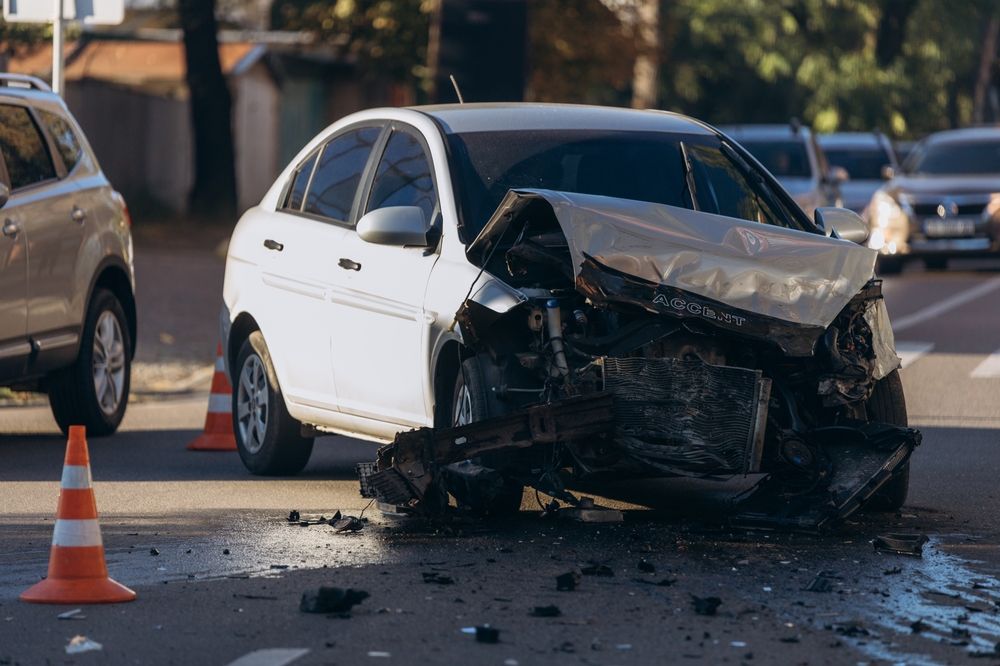
When the other driver has no insurance, your injury claim moves to the uninsured motorist (UM) coverage in your own policy. Revised Statutes of Missouri (RSMo) Section 379.203 requires that coverage in Missouri auto liability policies.
Your insurer pays covered damages you are legally entitled to recover from the uninsured driver, up to the applicable policy limits. Where your claim goes depends on what coverage the other driver carried.
| The Other Driver’s Coverage | Where Your Injury Claim Goes | Who Pays for Your Car |
|---|---|---|
| Full liability insurance | The other driver’s liability insurer | The other driver’s liability insurer |
| Minimum insurance with serious injuries | The other driver’s insurer first, then your underinsured motorist (UIM) coverage if you bought it | The other driver’s liability insurer, up to its property limit |
| No insurance at all | Your own UM coverage | Your collision coverage, if you carry it |
| Hit-and-run with an unknown driver | Your own UM coverage | Your collision coverage, if you carry it |
| Less than Missouri’s minimum limits | Your own UM coverage can apply under Missouri case law | Depends on the other driver’s coverage |
A UM claim still requires proof, even though you pursue it with your own company. Your claim rests on four points.
- The uninsured driver caused or helped cause the crash.
- The other driver lacked insurance at the time of the crash.
- The crash caused the injuries you claim.
- Your records support the value of your medical costs, lost income and pain.
Missouri UM coverage pays for injuries rather than property damage, so the proof centers on your body and your records. The car repair question runs through separate coverage, if you carry it.
What Is the Missouri Uninsured Motorist Coverage Minimum?
The Missouri uninsured motorist coverage minimum is $25,000 per person and $50,000 per accident, matching the minimum bodily injury limits referenced in RSMo 303.030. The $50,000 per-accident limit caps what everyone hurt in one crash can share under that minimum.
Your policy can carry higher limits, and your declarations page, the summary page of your policy, shows yours. If several vehicles in your household carry UM coverage, Missouri law can allow you to combine those limits, which lawyers call stacking.
Suing an Uninsured Driver in Missouri: When Does It Make Sense?
Suing an uninsured driver in Missouri makes sense when that driver has collectible assets, steady income or a connection to another source of insurance.
You can file that lawsuit, generally within five years under RSMo 516.120, but winning a judgment and collecting it are different tasks.
A few facts about the driver decide whether a lawsuit can produce a recovery.
- The driver can own a home, land or other property that a judgment can reach, subject to applicable exemptions.
- The driver can have wages that are subject to garnishment after a judgment, subject to Missouri and federal limits.
- The driver can have been working for an employer at the time, which can make the employer responsible if the legal requirements for employer liability are met.
- The driver can have borrowed a car whose owner carried applicable insurance, which can change the available coverage.
A Missouri judgment generally remains enforceable for 10 years and can be revived under RSMo 516.350, so a driver with nothing collectible today can acquire assets later. A lawsuit can also run alongside your UM claim rather than replace it.
What Happens to the Uninsured Driver Under Missouri Law?
Missouri requires vehicle owners to maintain insurance or other financial responsibility under RSMo 303.025. A driver who violates those requirements can face penalties under Missouri law.
The state’s financial responsibility law also provides for license consequences after certain crashes when the statutory requirements apply. Those penalties affect the driver, but they do not pay your medical bills.
What If You Were Driving Without Insurance Too?
If you were driving without insurance too, Missouri’s no pay, no play law does not bar noneconomic damages against an at-fault driver who also failed to comply with Missouri’s financial responsibility laws.
RSMo 303.390 applies its noneconomic-damages restriction when the at-fault driver complied with Missouri’s financial responsibility laws.
Without a policy of your own, though, you have no UM coverage under your own policy to claim. Your recovery then depends on the at-fault driver’s assets, a household member’s policy if you qualify as an insured under it, or other coverage that applies.
The no pay, no play law also matters in the reverse situation, when an insured driver hits an uninsured one. The law has several limits.
- The law bars noneconomic damages, such as pain and suffering, rather than medical bills or lost wages.
- The law applies when the at-fault driver complied with Missouri’s financial responsibility laws.
- The law does not apply when the statutory exception for an at-fault driver under the influence of drugs or alcohol applies.
- Other statutory exceptions can also prevent the restriction from applying.
Missouri courts have addressed disputes over the law’s application, so case-specific questions require reviewing the statute and current case law.
What Happens After You File an Uninsured Motorist Claim in Missouri?
After you file an uninsured motorist claim in Missouri, your insurer reviews the crash, confirms the other driver’s lack of coverage and evaluates your injuries.
The claim then ends in a settlement or, if the parties cannot agree, litigation under the policy. Many UM claims move through a similar series of steps.
- You give your insurer written notice of the crash and the claim.
- The adjuster confirms that the other driver had no insurance.
- The insurer reviews your medical records and can request an independent medical exam if the policy gives it that right.
- You or your lawyer send a demand once your doctors understand your injuries.
- The insurer makes an offer, and negotiations continue until the claim settles or proceeds to court.
A lawsuit involving your own insurer can feel strange, yet Missouri law treats a claim for UM benefits as a dispute arising under the insurance contract. A jury can decide disputed factual issues and damages when the case goes to trial.
Deadlines for an Uninsured Motorist Claim in Missouri
Missouri courts have applied the 10-year period in RSMo 516.110 to lawsuits seeking UM benefits under a written policy. A lawsuit against the at-fault driver generally must begin within five years.
Do not treat the longer period as time to wait. Your policy can require prompt notice, and failure to satisfy valid policy requirements can put coverage at risk.
When Does an Uninsured Motorist Claim Need a Lawyer?
An uninsured motorist claim can benefit from legal help when fault, injury severity or available coverage becomes disputed. Some UM claims stay simple, while others grow more involved as treatment continues.
Several signs point toward a claim that can benefit from legal help.
- Your insurer disputes who caused the crash or how serious your injuries are.
- Your treatment includes surgery, injections or months of therapy.
- More than one auto policy in your household can apply to the claim.
- Your insurer offers a settlement before your doctors finish evaluating your injuries.
- Health plans or medical providers have sent you repayment notices.
Missouri treats a UM claim as a contract claim, so the policy’s exact words can decide disputes that feel like fairness questions. Reading those words closely before you respond to an offer keeps you from agreeing to terms you did not see coming.
FAQs for an Uninsured Motorist Claim in Missouri
What if my insurance company denies my uninsured motorist claim?
If your insurance company denies your uninsured motorist claim, you can challenge the denial and, if needed, sue the company under your policy.
Missouri’s vexatious refusal statute, RSMo 375.420, allows a court or jury to award statutory damages and reasonable attorney fees when the statutory requirements are met and the insurer refused payment without reasonable cause or excuse.
A denial letter typically states the insurer’s reason, and that reason shapes the response.
Do I still have a UM claim if I was partly at fault?
Yes. You can still have a UM claim in Missouri if you were partly at fault. Missouri follows pure comparative fault, which reduces your recovery by your share of blame rather than automatically barring it.
An insurer can argue for a higher share of fault to lower its payment, so the crash details carry weight.
What if I turned down higher UM limits when I bought my policy?
If you turned down higher UM limits on a personal auto policy, you still carry at least Missouri’s required minimum UM coverage because RSMo 379.203 requires that coverage.
Other policies in your household can add coverage through stacking or UIM when their terms and Missouri law allow it.
Do I need a police report for an uninsured motorist claim in Missouri?
Not always, but a police report helps document an uninsured motorist claim by recording the crash and information about the other driver’s insurance status. A policy can also impose reporting requirements for certain claims, especially hit-and-run crashes.
If no officer came to the scene, a later report and your own written account can help document what happened.
Start Your Uninsured Motorist Claim in Missouri With a Clear Plan
Missouri law requires UM coverage in auto liability policies to protect insured people who are legally entitled to recover damages from uninsured motorists.
That protection addresses the situation in which the driver who caused your injuries cannot provide the required liability coverage.
Cook, Barkett, Ponder & Wolz (CBPW Law) represents injured people in uninsured motorist claims from offices in Cape Girardeau, Sikeston, Bloomfield and Poplar Bluff. We work as trial lawyers, not a settlement mill, and we prepare each UM file as a case a jury can hear.
Call for a free case evaluation at (573) 335-6651 to map out your claim, your coverage and your deadlines.
Cook, Barkett, Ponder & Wolz
Cape Girardeau Office
1610 N. Kingshighway, Suite 201
Cape Girardeau, MO 63701
Offices also in Sikeston, Bloomfield, and Poplar Bluff
