


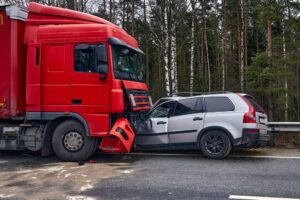
After a serious truck accident, most people assume the driver is the only one responsible. But in many cases, the trucking company may also be legally liable, and that can significantly affect how much compensation is available. The driver who hit you is not always the only one responsible for your injuries. When a commercial truck is involved, the company’s relationship with the driver and its business practices can all affect whether the company is legally responsible for a crash in Missouri.
The trucking company may be liable if the driver was working at the time of the crash or if the company failed in hiring, training, supervision, or vehicle maintenance. If you or a loved one were injured in a truck accident in Southeast Missouri, including Sikeston, Cape Girardeau, or Poplar Bluff, speaking with an experienced truck accident attorney may help you identify all potentially responsible parties early in your case.
Key Takeaways About Trucking Company Liability for Another Driver’s Injuries
- Trucking companies may face direct liability for their own failures in hiring, training, supervision, and vehicle maintenance, separate from the driver’s individual negligence.
- Federal Motor Carrier Safety Regulations in 49 CFR Parts 390 through 399 impose specific duties on motor carriers, and violations of those regulations may serve as evidence of negligence in a civil lawsuit.
- The legal doctrine of respondeat superior holds employers liable for the negligent acts of employees committed within the scope of employment, which applies to most trucking company and driver relationships.
- Missouri’s five-year statute of limitations applies to truck accident injury claims, but the complexity of these cases makes early investigation valuable for preserving electronic logs, dispatch records, and maintenance files.
When Is a Trucking Company Liable for a Truck Accident in Missouri?
Respondeat superior is a legal doctrine that holds an employer responsible for the negligent acts of an employee when those acts occur within the scope of employment. In trucking cases, this doctrine creates a direct path from the driver’s negligence to the trucking company’s financial responsibility.
When the Doctrine Applies to a Truck Accident
A trucking company generally faces vicarious liability under respondeat superior when the driver was performing job duties at the time of the crash. Several factors help determine whether the driver acted within the scope of employment:
- The driver was hauling freight or making a delivery assigned by the carrier at the time of the collision
- The driver was operating a vehicle owned, leased, or controlled by the trucking company
- The driver was following a route or schedule set or approved by the carrier’s dispatch team
- The crash occurred during working hours or while the driver performed tasks related to the carrier’s business
Under this doctrine, you do not need to prove the trucking company itself acted negligently. If the driver’s negligence caused the crash while the driver acted within the scope of employment, the carrier bears liability for the resulting injuries. That principle opens access to the carrier’s insurance coverage, which typically far exceeds the driver’s personal policy limits.
The Independent Contractor Defense
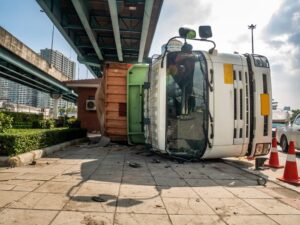
Trucking companies sometimes classify drivers as independent contractors to limit their exposure to respondeat superior claims. Federal regulations complicate that defense. Under 49 CFR Part 390, the motor carrier operating under its own DOT authority may remain responsible for the safe operation of vehicles displaying its DOT number, depending on regulatory control and leasing arrangements.
Missouri courts also look beyond labels to examine the actual working relationship. If the carrier controlled the driver’s routes, schedules, equipment, and methods of work, a court may treat the driver as an employee for liability purposes even if the contract says otherwise. The distinction between employee and independent contractor often becomes one of the most contested issues in trucking litigation.
Can a Trucking Company Be Responsible for a Driver’s Negligence?
Beyond respondeat superior, a trucking company may face liability for its own independent acts of negligence. These direct liability theories target the company’s decisions and practices rather than relying solely on the driver’s conduct at the scene.
Negligent Hiring and Retention
Federal regulations under 49 CFR Part 391 require motor carriers to investigate the background of every driver they hire. Carriers must review driving records, verify qualifications, conduct drug and alcohol testing, and perform physical examinations before putting a driver behind the wheel.
When a carrier hires a driver with a disqualifying history, or keeps a driver on the payroll after learning of safety violations, the company faces direct liability for negligent hiring or retention. The driver qualification file that every carrier must maintain under federal law often becomes a key piece of evidence in these cases.
Negligent Maintenance
Motor carriers must systematically inspect, repair, and maintain every commercial vehicle they operate under 49 CFR Part 396. Tire blowouts, brake failures, and lighting problems trace back to the carrier when maintenance records reveal missed inspections or deferred repairs. The types of mechanical failures that most frequently point to carrier negligence include:
- Brake systems that fall below inspection standards or show wear beyond allowable limits
- Tires with insufficient tread depth, improper inflation, or visible damage that the carrier neglected to replace
- Lighting and reflector deficiencies that reduced the truck’s visibility to other drivers, especially at night or in poor weather
- Coupling devices, steering components, or suspension systems that the carrier failed to inspect or repair on schedule
A carrier that delays maintenance to keep trucks generating revenue takes on direct responsibility when a mechanical failure contributes to a collision.
Negligent Supervision and Dispatch

Trucking companies control when and where their drivers operate. When a carrier pushes a driver to meet delivery deadlines that require exceeding hours-of-service limits, the company’s dispatch decisions become a separate source of liability.
Federal hours-of-service regulations under 49 CFR Part 395 cap driving time at 11 hours within a 14-hour window after 10 consecutive hours off duty. A carrier that pressures drivers to exceed those limits, or ignores electronic logging device data showing violations, takes on direct responsibility for fatigue-related crashes.
Dispatch records, driver communications, and delivery schedules often reveal whether the carrier created the conditions that led to the accident.
What Laws Apply to Trucking Companies in Missouri?
The Federal Motor Carrier Safety Administration (FMCSA) enforces the regulations that govern commercial trucking operations across the country. These rules, found in 49 CFR Parts 390 through 399, set minimum safety standards for every motor carrier. A violation of these regulations does not automatically prove liability, but it provides strong evidence that the company failed to meet its duty of care.
Key FMCSA Regulations That Affect Trucking Company Liability
Several regulatory areas come into play when evaluating whether a trucking company is liable for another driver’s injuries after a crash in SEMO or elsewhere in Missouri:
- 49 CFR Part 391 sets driver qualification standards, requiring carriers to verify licenses, review driving histories, administer drug and alcohol tests, and maintain qualification files for every driver
- 49 CFR Part 395 establishes hours-of-service rules that limit driving time and mandate rest periods to reduce fatigue-related crashes
- 49 CFR Part 396 requires systematic inspection, repair, and maintenance of all commercial vehicles and imposes recordkeeping requirements on carriers
- 49 CFR Part 387 sets minimum levels of financial responsibility, requiring interstate carriers to maintain liability insurance of at least $750,000 for general freight operations
These regulations apply to carriers operating in interstate commerce, but Missouri often adopts similar standards for intrastate operations. Your truck accident attorney may use documented violations to build a negligence claim against the carrier.
What Damages May You Recover When a Trucking Company Is Liable
Holding a trucking company liable opens access to insurance policies and corporate assets that far exceed what most individual drivers carry. Federal law requires interstate general freight carriers to maintain at least $750,000 in liability insurance under 49 CFR Part 387, compared to Missouri’s minimum auto insurance requirement of $25,000 per person under RSMo § 303.020. That difference in available coverage changes the landscape of a truck accident claim significantly.
Types of Compensation in Missouri Truck Accident Cases
Missouri law allows injured plaintiffs to pursue both economic and non-economic damages against a liable trucking company. In severe truck crash cases across Southeast Missouri, the damages often include:
- Past and future medical expenses, including emergency treatment, surgery, hospitalization, rehabilitation, and long-term care needs

- Lost wages and lost earning capacity if the injuries prevent you from returning to your previous level of employment
- Pain and suffering, emotional distress, and loss of enjoyment of daily activities
- Property damage to your vehicle and personal belongings inside it at the time of the crash
Missouri’s pure comparative fault system under RSMo § 537.765 applies to truck accident cases. A jury may reduce your award by your percentage of fault, but Missouri does not bar recovery unless you bear the full blame for the collision. In many truck accident cases, the carrier’s negligence is the dominant factor.
How Cook, Barkett, Ponder & Wolz Pursues Trucking Company Liability in SEMO
Truck accident cases against carriers involve more complex evidence than typical car crash claims. Cook, Barkett, Ponder & Wolz (CBPW Law) are trial attorneys who pursue trucking company liability by investigating the company’s own conduct, not just the driver’s actions at the scene.
Investigating the Carrier’s Role in the Crash
The firm examines the carrier’s compliance with federal safety regulations, its hiring and supervision practices, its vehicle maintenance records, and its dispatch decisions. Electronic logging device data, driver qualification files, and internal safety audits often reveal patterns of negligence that contributed to the collision.
CBPW Law maintains offices in Sikeston, Cape Girardeau, and Bloomfield. The Cape Girardeau office sits across from the Osage Center and northwest of Southeast Missouri State University. The firm also accepts referrals and co-counsel partnerships from attorneys across Southeast Missouri who need trial-level support on complex trucking litigation.
FAQs for Trucking Company Liability for Another Driver’s Injuries
When is a trucking company liable for a truck accident in Missouri?
A trucking company may face liability under respondeat superior when the driver acted within the scope of employment at the time of the crash. The company may also face direct liability for its own negligence in hiring, training, supervising, maintaining vehicles, or violating federal safety regulations.
Does it matter if the truck driver was an employee or an independent contractor?
It may matter, but federal regulations require the motor carrier operating under its DOT authority to maintain certain responsibilities for vehicles displaying its number. Missouri courts look at the actual working relationship rather than contract labels when determining whether respondeat superior applies.
What federal regulations govern trucking company safety obligations?
The FMCSA enforces regulations in 49 CFR Parts 390 through 399. These cover driver qualifications, hours of service, vehicle maintenance, drug and alcohol testing, and financial responsibility. Violations of these regulations may serve as evidence of negligence in a civil injury lawsuit.
How long do I have to file a truck accident lawsuit in Missouri?
Missouri’s statute of limitations under RSMo § 516.120 gives you five years from the date of the injury to file a personal injury lawsuit. Wrongful death claims carry a three-year deadline. Early investigation helps preserve electronic logs, dispatch records, and maintenance files that carriers may otherwise overwrite or discard.
What kind of insurance do trucking companies carry?
Federal law under 49 CFR Part 387 requires interstate general freight carriers to maintain at least $750,000 in liability insurance. Carriers transporting hazardous materials must carry higher coverage. These policy limits far exceed the minimum auto insurance Missouri requires for individual drivers.
Take Action If a Trucking Company May Be Liable for Your Injuries

Cape Girardeau Car Accident Attorney, Phillip J. Barkett
Trucking companies and their insurers begin investigating crashes immediately. They dispatch rapid response teams, secure electronic data, and start building their defense before you have spoken with an attorney. Every day that passes without someone preserving evidence on your behalf is a day the carrier uses to shape the narrative around the crash.
If a commercial truck injured you or a family member on I-55, Highway 60, or any road in Southeast Missouri, Cook, Barkett, Ponder & Wolz may evaluate your claim and investigate the carrier’s role. Contact the firm to discuss your truck accident case.