


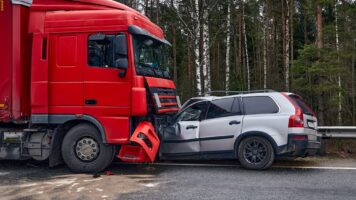
When a passenger vehicle is struck from behind by a tractor-trailer, the results can be devastating. These collisions are not just about a dented bumper; they often involve serious injuries and profound emotional distress. The sheer size and weight difference mean that even a low-speed impact can have serious consequences for those in the smaller car. Exploring why these specific collisions happen can shed light on where accountability may lie.
Key Takeaways about the Causes of Rear-End Truck Accidents
- Driver-related factors like distraction, fatigue, and speeding are among the most frequent causes of rear-end truck accidents.
- Federal regulations, such as Hours of Service rules, exist to prevent driver fatigue, but violations can and do occur.
- Mechanical failures, particularly with a truck’s braking system, can lead to a driver’s inability to stop in time.
- Trucking companies hold a responsibility to properly maintain their fleets and adequately train their drivers.
- Determining the cause of a rear-end truck collision often requires a detailed investigation into driver logs, maintenance records, and vehicle data.
The Unique Dangers of Truck Rear-End Collisions
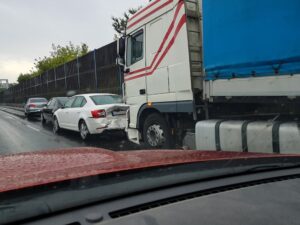 It’s a matter of basic physics: a fully loaded commercial truck can weigh up to 80,000 pounds, while the average passenger car weighs around 4,000 pounds. When a truck hits a car from behind, it transfers an immense amount of force. This can lead to catastrophic damage to the smaller vehicle and severe injuries for its occupants, including traumatic brain injuries, spinal cord damage, and broken bones.
One of the most dangerous outcomes of these collisions is an underride accident. This happens when the front of the passenger car slides underneath the higher trailer of the truck. Federal regulations require most large trailers to have rear impact guards, sometimes called underride guards, to help prevent this. However, these guards can fail, or may not be present on all types of trucks, leading to some of the most tragic outcomes in a rear-end collision.
Common Causes of Rear-End Truck Accidents Involving Driver Error
While mechanical issues or poor weather can play a role, the actions—or inaction—of the truck driver are frequently at the center of a rear-end collision. Commercial drivers are held to a higher standard of care because of the potential danger their vehicles pose, but mistakes and poor choices still happen.
Distracted Driving: A Major Factor in SEMO Truck Accidents
Driving from Poplar Bluff to Cape Girardeau requires constant attention, but distractions inside the cab can pull a driver’s focus away from the road. For a commercial truck driver, these distractions can include:
- Using a cell phone for texting, calling, or GPS
- Adjusting the radio or other in-cab equipment
- Interacting with a dispatch device
- Eating, drinking, or smoking
- Looking at paperwork or logbooks
According to the National Highway Traffic Safety Administration (NHTSA), thousands of people are killed each year in crashes involving distracted drivers. For a truck driver, even a few seconds of looking away from the road means their 80,000-pound vehicle has traveled the length of a football field without anyone in control. That momentary lapse is all it takes to cause a life-altering crash.
Driver Fatigue and Hours of Service Violations
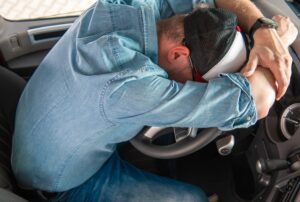 The pressure to deliver cargo on time can lead some drivers and trucking companies to bend or break important safety rules. The Federal Motor Carrier Safety Administration (FMCSA) sets strict Hours of Service regulations that dictate how long a driver can be on the road without taking a mandatory rest break. These rules are designed to prevent the dangerous effects of fatigue, which can impair a driver’s judgment and slow their reaction time just as much as being under the influence of alcohol.
When a driver violates these rules, they put everyone on the road at risk. A drowsy driver may not notice slowing traffic ahead or may misjudge the distance needed to stop safely. Investigating these crashes often involves carefully reviewing the driver’s electronic logging device (ELD) or paper logbooks to see if they were complying with federal law.
Following Too Closely and Misjudging Stopping Distance
One of the most critical skills for a commercial truck driver is understanding their vehicle’s stopping distance. A loaded tractor-trailer takes significantly longer to come to a complete stop than a passenger car.
- At 65 mph on dry pavement, a passenger car needs about 316 feet to stop.
- A loaded commercial truck traveling at the same speed needs approximately 525 feet to stop, or nearly the length of two football fields.
This massive difference means that if a truck driver is tailgating a smaller vehicle, they have virtually no chance of stopping in time if traffic suddenly slows or stops, like it often can near the Bill Emerson Memorial Bridge. Following too closely, or tailgating, is a dangerous and aggressive behavior that leaves no margin for error.
This lack of a proper safety cushion is a primary reason why so many rear-end truck accidents occur.
Speeding and Aggressive Driving
Driving over the speed limit is dangerous in any vehicle, but it’s especially hazardous in a large truck. Speed not only increases the required stopping distance but also magnifies the force of impact in a collision. A driver who is speeding through Sikeston or Scott City on their way to a delivery point is reducing their ability to react to changing road conditions and increasing the likelihood of causing a severe accident.
Aggressive behaviors like frequent lane changes, failing to yield, and general impatience can also contribute to a driver making a critical error that leads to a rear-end crash.
Mechanical Failures as a Cause of Rear-End Truck Accidents
Sometimes, the driver does everything right, but a failure of the truck’s equipment makes a collision unavoidable. Trucking companies have a legal duty to inspect, maintain, and repair their vehicles to ensure they are safe for public roads. When they cut corners on maintenance, mechanical failures can and do happen.
Brake Failure and Improper Maintenance
The braking system on a large commercial truck is complex, relying on an air brake system that requires regular inspection and adjustment. If brakes are out of adjustment, worn down, or have an air leak, they may not provide enough stopping power when the driver needs it most.
The FMCSA has detailed regulations for vehicle maintenance, and a failure to follow these standards can be a direct cause of a crash. Brake failure is one of the most commonly cited mechanical factors in truck accident investigations.
Tire Blowouts and Other Equipment Issues
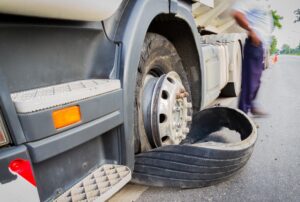 Beyond the brakes, other types of equipment failure can also lead to a rear-end collision. A sudden front-tire blowout can cause a driver to lose control, while other issues might be less dramatic but just as dangerous.
- Worn or Defective Tires: Tires without enough tread depth cannot maintain proper traction, especially in wet conditions, increasing stopping distances.
- Inoperable Brake Lights: If the truck’s brake lights are not working, drivers behind them have no warning that the truck is slowing down. Conversely, if a passenger car’s lights are out, a truck driver may not see them in time at night.
- Defective Couplings: The connection between the tractor and the trailer must be secure. A failure here can cause unpredictable and dangerous vehicle behavior.
These types of mechanical issues often point back to a lack of proper pre-trip inspections by the driver or a systemic failure by the trucking company to keep its fleet in safe working order.
Other Contributing Factors to Truck Collisions
While driver error and mechanical failure are the leading causes, other circumstances can also contribute to a rear-end truck accident.
Improperly Loaded Cargo
How cargo is loaded and secured in a trailer is crucial for the truck’s stability. If a load is too heavy or shifts during transit, it can dramatically change the vehicle’s handling and braking characteristics.
- Overweight Loads: An overweight truck requires an even longer distance to stop and puts extra strain on its brakes and tires.
- Unbalanced Loads: A load that is not properly balanced can make the trailer unstable and difficult to control during a sudden stop.
- Unsecured Cargo: If cargo breaks loose inside the trailer, the sudden shift in weight can cause the driver to lose control.
The driver, the trucking company, and the company that loaded the freight may all share responsibility for ensuring the cargo is loaded correctly and legally.
Poor Weather and Road Conditions in Southeast Missouri
Anyone who drives regularly in our region knows that weather can change quickly. Heavy rain, dense fog, and winter ice can make roads treacherous. While bad weather can affect any driver, commercial truck drivers are expected to have the training and judgment to adapt. This means slowing down significantly, increasing their following distance, or even pulling over if conditions become too dangerous.
Blaming the weather is often not a sufficient excuse if a driver failed to operate their vehicle in a way that was safe for those conditions.
What to Do After a Rear-End Collision with a Truck
Once you have addressed your immediate medical needs, the process of recovery begins. It can feel like a complicated time, but keeping organized can help protect your rights as you figure out the next steps. It is important to remember that the trucking company and its insurance provider will start their own investigation immediately, and their goal is to limit their financial liability.
Here are a few things you can do to keep track of how the incident has affected your life:
- Create a File: Keep all documents related to the accident in one place. This includes the police report, the other driver’s information, medical bills, and any correspondence from insurance companies.
- Document Your Injuries and Recovery: Keep a simple journal to track your medical appointments, the pain you are experiencing, and how your injuries are impacting your daily activities.
- Track Your Expenses: Note all costs related to the accident, from prescription co-pays to mileage for driving to doctor’s appointments. Also, keep records of any time you have had to miss from work.
- Be Cautious with Insurance Adjusters: It is common for the trucking company’s insurer to call you quickly. You are not obligated to give a recorded statement. It is often wise to seek guidance before having these conversations.
Taking these steps can help create a clear record of the situation, which is valuable for establishing the full extent of your losses.
Rear-End Truck Accident FAQs
Here are answers to some common questions that arise when a commercial truck causes a rear-end collision.
What if the truck driver claims I stopped suddenly?
This is a common defense. However, in many rear-end collisions, there is a presumption that the rear driver was at fault for following too closely or not paying attention. An investigation can often use evidence from the scene, vehicle data recorders, and witness statements to determine if a sudden stop was necessary due to traffic conditions or another hazard.
Can a trucking company be held responsible for a driver’s actions?
Yes. Under a legal concept called vicarious liability, an employer is often responsible for the actions of its employee if the employee was acting within the scope of their employment. Additionally, a trucking company can be held directly liable if it was negligent in hiring an unsafe driver, failing to provide proper training, or encouraging drivers to violate safety regulations.
How long do I have to file a claim after a truck accident in Missouri?
In Missouri, the time limit for filing a personal injury lawsuit is generally five years from the date of the injury. This is known as the statute of limitations. If you do not file a claim within that time frame, you may lose your right to seek compensation forever.
What if I was partly to blame for the rear-end accident?
Missouri uses a pure comparative negligence system to handle cases where both drivers share fault for an accident. This means a jury can reduce your compensation award by your percentage of fault, but you can still recover damages even if you bear more than 50% of the blame.
A Compassionate Legal Team for Your SEMO Truck Accident Case

Daniel J. Grimm, Truck Accident Lawyer
The physical, emotional, and financial challenges that come with a serious truck accident can be difficult. You may be dealing with injuries, medical bills, and uncertainty about the future. During this time, having a dedicated legal team on your side can make a significant difference.
At Cook, Barkett, Ponder & Wolz, we have been fighting for injured people in Southeast Missouri for decades. Our team understands that your story is important, and we take the time to listen and understand the full impact the accident has had on your life. We have the resources and experience to thoroughly investigate complex truck accident cases, hold responsible parties accountable, and work diligently to secure the compensation you and your family deserve.
If you or a loved one has been injured in a rear-end truck accident, contact us at (573) 335-6651 or through our online form for a free, no-obligation case evaluation. We are here to help you move forward. You pay no fees unless we win.