



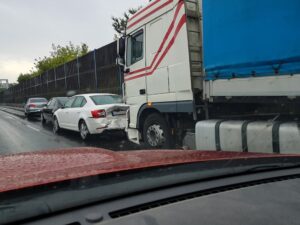
The semi-truck behind you on I-70 near Independence didn’t slow down fast enough when traffic stopped. The impact crushed your rear seat into the front cabin, and you’re now dealing with spinal injuries your doctor says will require surgery and months of physical therapy. The trucking company’s insurer called yesterday, offering a quick settlement that barely covers your emergency room bill, and you’re trying to understand who’s actually at fault and what your claim is worth.
Our truck accident attorneys at Cook, Barkett, Ponder & Wolz (CBPW Law) handle rear-end truck collision cases across Southeast Missouri. We investigate the causes and hold trucking companies and drivers accountable when their negligence causes serious injuries. You can trust us to serve as your advocate, taking on the legal burden while you physically recover.
Key Takeaways for Missouri Rear-End Truck Accidents
- In Missouri, the rear-end collision doctrine can allow a presumption of negligence against the rear driver when the facts fit, but it’s rebuttable and doesn’t apply in every rear-end crash
- Under ideal conditions, a fully loaded tractor-trailer at 65 mph may need about 525 feet to stop, compared to about 316 feet for a passenger vehicle
- Rear underride accidents occur when passenger vehicles slide underneath truck trailers, often causing catastrophic injuries or death despite federal rear impact guard requirements
- Black box data, driver logs, and maintenance records provide critical evidence showing whether drivers violated hours-of-service rules, exceeded safe speeds, or operated trucks with known brake defects
- Missouri’s pure comparative fault rule reduces your recovery by your percentage of blame, so fighting unwarranted fault allegations protects your settlement
Why Rear-End Truck Collisions Are So Dangerous
A fully loaded commercial truck can weigh up to 80,000 pounds, while the average passenger car weighs around 4,000 pounds. When a semi-truck strikes a car from behind, it transfers enormous force that often results in severe injuries, including traumatic brain injuries, spinal cord damage, internal organ injuries, and broken bones.
The physics of these collisions creates disproportionate damage. A passenger vehicle’s rear crumple zone offers minimal protection against the mass and momentum of an 80,000-pound truck. The force can push passenger vehicles into other cars, off the road, or into guardrails and bridge structures, creating secondary impacts that compound injuries.
Rear-end truck accidents can also cause chain-reaction collisions on highways like I-70, I-44, and Highway 63, where multiple vehicles become involved after the initial impact. These multi-vehicle crashes increase the severity of injuries and complicate liability determinations as insurance companies attempt to assign fault across multiple drivers.
Who Is At Fault in a Missouri Rear-End Truck Accident?
Missouri cases recognize a rear-end collision doctrine that can support an inference of negligence against the rear driver in the right fact pattern, but the doctrine is limited in scope and can be defeated by evidence of a valid defense or excuse. Trucking companies investigate aggressively to find evidence that shifts fault to the front driver, such as sudden stops without justification, non-functioning brake lights, cutting in front of the truck without adequate spacing.
Missouri’s pure comparative fault system allows you to recover even when you share blame, but your compensation gets reduced by your fault percentage.
Common Causes of Rear-End Truck Accidents
Rear-end truck collisions can result from driver errors, mechanical failures, improper maintenance, and violations of federal safety regulations.
Following Too Closely
At 65 mph on dry pavement, a loaded commercial truck needs approximately 525 feet to stop, while a passenger car needs approximately 316 feet. When truck drivers follow too closely behind passenger vehicles, they eliminate the safety cushion needed to stop safely if traffic slows suddenly.
Driver Fatigue and Hours-of-Service Violations
Federal Hours of Service regulations limit how long commercial drivers can operate without mandatory rest breaks. Fatigued drivers experience impaired judgment and slower reaction times similar to alcohol intoxication. Drivers who violate hours-of-service rules to meet delivery deadlines may not notice slowing traffic or misjudge stopping distances.
Investigating rear-end truck accidents requires examining the driver’s electronic logging device or paper logbooks to determine whether they complied with federal requirements. Violations could establish that the trucking company and driver prioritized profits over safety.
Distracted Driving
Commercial truck drivers face numerous distractions, including cell phones, GPS devices, dispatch communications, eating, and reviewing paperwork. For a truck traveling at highway speeds, even a few seconds looking away means the 80,000-pound vehicle has traveled the length of a football field without anyone in control.
Cell phone records, witness statements about driver behavior, and admissions during recorded statements can help prove that distraction caused the rear-end collision.
Brake Failures and Improper Maintenance
Commercial truck braking systems rely on air brakes that require regular inspection and adjustment. When brakes are out of adjustment, worn down, or have air leaks, they may not provide adequate stopping power.
Trucking companies have legal duties to inspect, maintain, and repair their vehicles. When they cut corners on maintenance to save money, brake failures become more likely. Investigating rear-end truck accidents requires examining maintenance records, inspection reports, and brake system condition to determine whether deferred maintenance or known defects contributed to the collision.
Speeding and Overweight/Improperly Loaded Cargo
Speed increases required stopping distances and magnifies impact forces. Overweight loads require even longer stopping distances and put extra strain on brakes. Unbalanced or unsecured cargo that shifts suddenly can cause drivers to lose control.
Black box data from the truck’s electronic control module shows the vehicle’s speed in the moments before impact, proving whether the driver was speeding or braking appropriately.
What Evidence Matters Most in Rear-End Truck Accidents?
Proving liability in rear-end truck accidents requires a comprehensive investigation and evidence collection. The trucking company’s rapid-response team may begin gathering evidence immediately after the crash to build its defense, making early attorney involvement critical for preserving the evidence that supports your claim.
Black Box Data
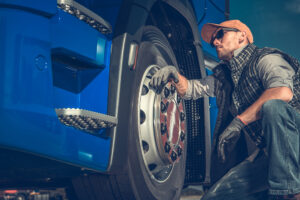
Commercial trucks carry electronic control modules (ECMs) that track vehicle speed, braking, throttle position, and other operational data. This information proves whether drivers were speeding, how hard they braked before impact, and whether they took evasive action. Black box data typically stores for limited periods before being overwritten, making immediate attorney involvement critical.
Driver Logs and Hours-of-Service Records
Electronic logging devices or paper logbooks show whether drivers complied with federal hours-of-service regulations and whether the driver was fatigued from excessive driving hours when the collision occurred.
Maintenance Records
Trucking companies must maintain detailed records of vehicle inspections, repairs, and maintenance. These records show whether known brake defects, tire problems, or other mechanical issues existed before the crash and whether the company took appropriate corrective action.
Dashcam Footage and Witness Statements
Dashcam footage from the truck, other vehicles, or traffic cameras shows what happened in the moments before the collision. Eyewitnesses provide independent accounts of the truck following too closely, the driver being distracted, or other behaviors that contributed to the crash.
How Trucking Companies Try to Shift Fault for Rear-End Collisions
Missouri courts may allow an inference of rear driver liability in some cases, but it’s not automatic and applies only when the case fits the doctrine’s prerequisites.:
- The front driver stopped suddenly without justification. Evidence showing why the front driver stopped, such as traffic conditions, road hazards, and pedestrians, helps counter this defense.
- The front driver had non-functioning brake lights. Vehicle inspection records and witness statements about brake light functionality become critical.
- The front driver cut in front of the truck without adequate spacing. If a car merged immediately before the collision without leaving sufficient following distance, the truck driver may argue that they couldn’t stop in time.
Strong evidence showing the truck driver’s negligence, like following too closely, distracted driving, speeding, and hours-of-service violations, also protects your claim against these defenses.
What Damages Can You Recover?
Missouri law allows rear-end truck accident victims to recover both economic and non-economic damages:
Economic damages include:
- Medical expenses (emergency care, surgery, hospitalization, rehabilitation, future treatment)
- Lost wages and lost earning capacity if injuries prevent returning to your previous job
- Property damage (vehicle repair/replacement, rental car, towing)
Non-economic damages compensate for:
- Pain and suffering
- Emotional distress, anxiety, depression, PTSD
- Loss of enjoyment of life
- Disfigurement and scarring
- Loss of consortium
Rear-end truck accidents often cause catastrophic injuries that generate damages far exceeding typical car accident claims, justifying substantial compensation.
The Deadly Danger of Rear Underride Accidents
Rear underride collisions represent some of the most catastrophic types of rear-end truck accidents. These crashes occur when the front of a passenger vehicle slides underneath the truck’s trailer during impact, allowing the trailer to penetrate directly into the passenger compartment.
Federal regulations under 49 C.F.R. § 393.86 generally require rear impact guards on trailers manufactured on or after January 26, 1998, subject to exceptions. Rear impact guards (underride guards) are designed to prevent passenger vehicles from sliding underneath during rear-end collisions. However, these guards can fail during crashes if they’re damaged, improperly maintained, or exceed their design limitations. Certain truck types are also exempt from underride guard requirements, and older trailers may not have them at all.
When underride guards fail or are absent, the truck’s trailer can shear off the roof of the passenger vehicle, causing catastrophic head and neck injuries or death to vehicle occupants. The Insurance Institute for Highway Safety has documented numerous cases where rear impact guards bent, broke, or separated during crashes, failing to provide the protection they were designed to deliver.
How Cook, Barkett, Ponder & Wolz Handles Rear-End Truck Accident Cases
Our Missouri truck crash lawyers handle rear-end truck accident cases across Southeast Missouri with immediate evidence preservation, thorough liability investigation, and aggressive representation against trucking companies.
We Preserve Critical Evidence Immediately

Some electronic data can be overwritten if not preserved quickly, and federal rules allow carriers to keep certain records only for minimum periods. We send spoliation letters to trucking companies immediately after taking cases, demanding preservation of electronic control module data, driver logs, maintenance records, inspection reports, and dashcam footage.
We Investigate Liability Thoroughly
We review black box data with experts who interpret speed and braking information, examine maintenance records for evidence of deferred repairs, interview witnesses, and obtain traffic camera footage when available. Our team understands Federal Motor Carrier Safety Administration regulations and uses violations as evidence of negligence.
We Counter Trucking Company Defenses
When trucking companies argue that front drivers stopped suddenly or contributed to crashes, we gather evidence showing why front drivers’ actions were reasonable, prove brake lights were functioning, and demonstrate that following distances were inadequate regardless of other factors.
You Focus on Recovery While We Handle the Legal Fight
Recovering from a rear-end truck accident means managing medical appointments, physical therapy, pain, lost income, and uncertainty about your future. You shouldn’t also be chasing down insurance adjusters, decoding federal trucking regulations, or fighting with defense attorneys who are paid to minimize what you receive. We handle the investigation, negotiation, and litigation so you can focus on healing and rebuilding your life after a crash that wasn’t your fault.
FAQ for Missouri Rear-End Truck Accidents
How Long Do I Have to File a Truck Accident Lawsuit in Missouri?
Missouri gives you five years from the crash date to file a personal injury lawsuit under Mo. Rev. Stat. § 516.120. Wrongful death claims must be filed within three years of the date of death. However, critical evidence disappears in days and weeks, not years, so prompt action is key.
What if the Trucking Company Blames Me for Stopping Suddenly?
Missouri law recognizes that drivers may need to stop suddenly due to traffic conditions, road hazards, or other legitimate reasons. Evidence showing why you stopped helps counter claims that your stop was unjustified. Additionally, truck drivers must maintain safe following distances that allow them to stop even when the front driver brakes suddenly.
What Happens if the Truck Driver Who Hit Me Was an Independent Contractor?
Independent contractor status doesn’t eliminate your options for recovery. Missouri courts look beyond job titles to determine whether the company exercised enough control over the driver to create legal responsibility. Federal safety regulations define “employee” to include a driver, including an independent contractor, while operating a commercial motor vehicle, and FMCSA guidance emphasizes that carriers remain responsible for their drivers’ compliance.
Can I Sue if a Truck Rear-Ended Me While I Was Stopped at a Red Light?
Probably, yes. Being rear-ended at a red light can be a clear example of rear driver fault. You had a legal obligation to stop, and the truck driver had a legal obligation to maintain a safe following distance and stop behind you.
Do I Need a Lawyer for a Rear-End Truck Accident Claim?
Rear-end truck accidents involve complex federal regulations, aggressive trucking company defense teams, and evidence that disappears quickly. Some trucking companies deploy rapid-response teams immediately after serious crashes to gather evidence and build defenses before injured victims leave the hospital. Attorney involvement means critical evidence gets preserved and your rights are protected during investigations and settlement negotiations.
Contact a SEMO Injury Lawyer About Your Rear-End Truck Accident Case
Black box data overwrites, maintenance records get purged on retention schedules, and witnesses’ memories fade while you’re focused on recovery. The evidence that proves the truck driver was following too closely, violated hours-of-service rules, or drove with defective brakes disappears quickly when no one is actively preserving it.
Our Cape Girardeau office is across from the Osage Center, and we handle rear-end truck accident cases throughout Southeast Missouri, including Sikeston, Scott City, Poplar Bluff, and the SEMO region. Call Cook, Barkett, Ponder & Wolz to discuss your rear-end truck collision case during a free case evaluation.